
Adding Design Capacity: Placing a Remote Design Architect with a Wisconsin Design-Build Firm
- Client
- Lakeshore Design + Build (name changed)
- Industry
- Design-Build
- Location
- Wisconsin
- What we built
- A vetted remote design architect, deployed as additional support for the in-office architects
The Situation
Lakeshore is a design-build company that handles residential projects from the first design consultation through construction. Their in-office architects lead every project's design, meet with clients, and present design reveals.
As the number of projects grew, so did the design workload. Drafting, revisions, and drawing sets were piling up on the same small group of architects who also needed time for clients and site visits.
The Problem
The firm needed more design capacity, but hiring another full-time architect locally is slow, expensive, and risky. Finding someone with the right education, experience, and design skills can take months, and a poor fit costs even more time.
They also didn't want to hand off their design work to an outside firm. They needed someone who could work as part of their own team, follow their standards, and take direction from their architects.
What We Built
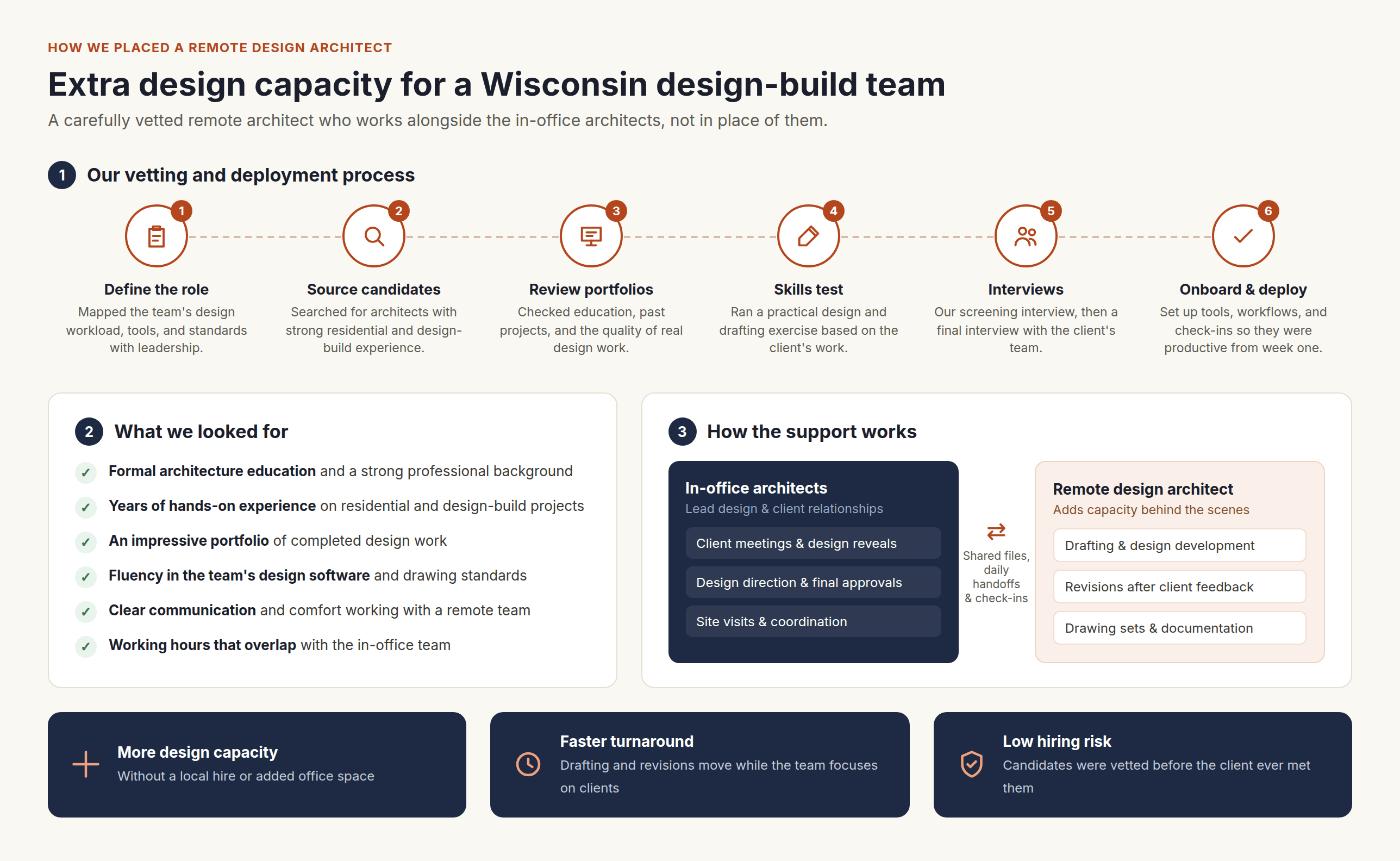
We found, vetted, and deployed a remote design architect to work as additional support for Lakeshore's in-office architects. The remote architect adds capacity behind the scenes, while the in-office team keeps leading design and client relationships.
Defining the role
We worked with leadership to map out the design workload, the software and drawing standards the team uses, and exactly where extra help would make the biggest difference.
Vetting candidates with impressive backgrounds
We searched for architects with formal architecture education, strong professional experience, and a track record on residential and design-build projects. Only candidates with impressive portfolios moved forward.
Testing real skills
Shortlisted candidates completed a practical design and drafting exercise based on the kind of work Lakeshore does, so their skills were proven before the client ever met them.
Interviews with the team
We ran screening interviews first, then introduced the strongest candidates to Lakeshore's team for a final interview, so the client made the final choice.
Smooth onboarding
We set up access to tools and shared files, agreed on daily handoffs and check-ins, and made sure working hours overlapped with the in-office team.
Clear division of work
The in-office architects lead client meetings, design direction, and approvals. The remote architect handles drafting, design development, revisions, and drawing sets.
The Results
What changed for the team:
- The in-office architects gained additional design support without the cost and time of a local hire.
- Drafting and revisions keep moving in the background while the in-office team focuses on clients and site visits.
- The firm can take on more projects without overloading its existing architects.
- Because candidates were vetted and tested in advance, the hiring risk was low and the new architect was productive quickly.
- The remote architect works as part of the team, following the firm's own standards and direction.
The Takeaway
Growing a design team doesn't always mean hiring locally. By carefully vetting experienced architects and deploying one who works alongside the in-office team, we gave Lakeshore more design capacity, faster turnaround, and less pressure on the architects who lead their projects.
Client name has been changed to protect client confidentiality.